
Anti-Hydrolysis Agents for
Polyurethane CASE Applications
HyMax carbodiimide anti-hydrolysis agents improve the hydrolysis resistance and service durability of polyester-based polyurethane systems used in coatings, adhesives, sealants and elastomers.
Why Hydrolysis Matters in Polyurethane CASE Applications
Polyurethane materials based on polyester polyols are susceptible to hydrolytic degradation when exposed to moisture, heat, and acidic or alkaline environments. The ester bonds in the polymer backbone can be cleaved by water molecules -- a process accelerated by elevated temperature and humidity.
Hydrolysis leads to molecular-weight reduction, loss of mechanical strength, surface deterioration, adhesion failure and shorter service life.
Carbodiimide-based anti-hydrolysis agents work by reacting with carboxylic acid groups generated during hydrolysis, interrupting the degradation cycle and preserving the polymer's mechanical properties.
Molecular-weight reduction
Chain scission lowers MW, weakening the polymer network.
Loss of mechanical strength
Tensile, tear and elongation properties deteriorate over time.
Surface deterioration
Chalking, cracking and discolouration visible at the surface.
Adhesion failure
Bond strength drops, leading to delamination or debonding.
Shortened service life
Products fail prematurely in humid or thermally demanding environments.
Accelerated by heat & humidity
High-temperature, high-humidity conditions greatly speed degradation.
Anti-Hydrolysis Agents for PU Coatings
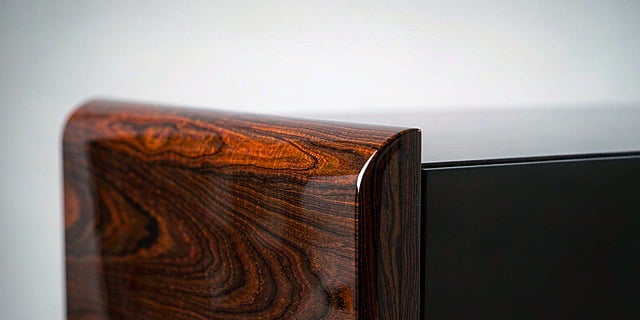
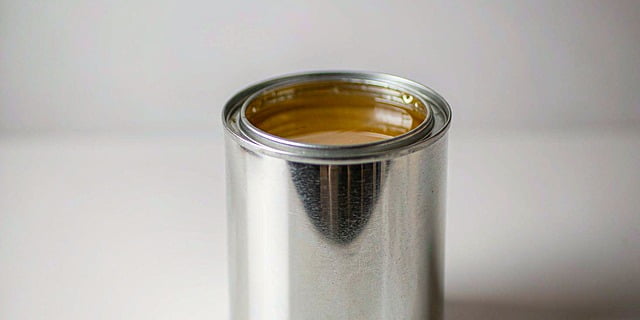
Polyester-based PU coatings used in textile, synthetic leather, paper, wood and protective applications can experience hydrolytic degradation under heat and humidity. Adding a carbodiimide agent may help maintain film integrity, adhesion and surface appearance under prolonged wet-heat exposure.
Recommended Products
HyMax 213 anti-hydrolysis agent
Polymeric carbodiimide · Powder · Good compatibility
HyMax 220 liquid anti-hydrolysis agent
Polymeric carbodiimide · Liquid · Solvent-based systems
HyMax CA polycarbodiimide crosslinking agent
Polymeric carbodiimide · Dispersion · Suitable for water-based systems
Anti-Hydrolysis Agents for PU Adhesives
Polyester-based PU adhesives used in lamination, footwear and textile bonding are vulnerable to hydrolytic degradation in humid environments. Bond strength reduction and delamination after wet-heat ageing are common failure modes. Carbodiimide agents may help stabilise bond performance -- evaluate effect on pot life and cure behaviour for each formulation.
Hydrolysis Stabilization for PU Sealants
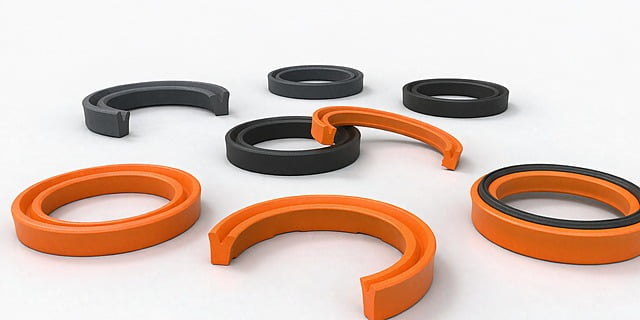
PU sealants span a wide range of chemistries -- one-component moisture-cure, two-component, polyester-based and polyether-based. Each has different requirements regarding moisture content, curing mechanism and additive compatibility.
Compatibility Testing Required
Adding carbodiimide to moisture-cure or isocyanate-containing systems may affect cure speed, storage stability and pot life. Compatibility testing is recommended before commercial use.
Sealant System Checklist
Curing mechanism
Moisture-cure, two-component, or other
Polyol base
Polyester (higher risk) or polyether
Moisture content
Pre-drying and moisture control needed
Compatibility
Test with full formulation before scale-up
Anti-Hydrolysis Agents for PU Elastomers
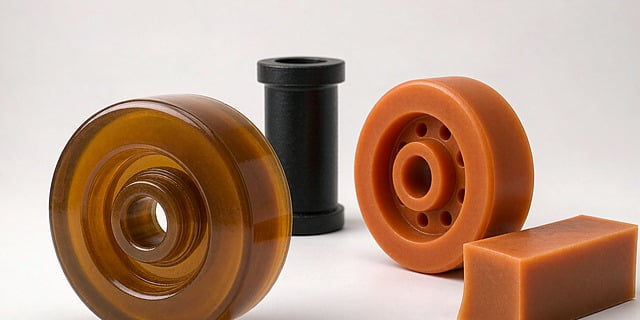
Cast PU elastomers, TPU and polyester-based PU parts used in rollers, wheels, industrial components and cable applications can suffer significant performance loss under wet-heat conditions. Incorporating a carbodiimide agent during processing helps maintain long-term mechanical performance.
Product Selection Guide
Use this table as a starting point. Final selection should be confirmed through laboratory evaluation.
| Application | Primary Issue | Key Info Needed | Suggested Products | Next Step |
|---|---|---|---|---|
| PU Coatings | Film performance loss after wet-heat ageing | Resin type, solids content, pH, cure conditions | Request Sample | |
| PU Adhesives | Bond strength reduction after ageing | 1K/2K, substrate type, cure method, pot-life | Formulation Review | |
| PU Sealants | Long-term wet-heat durability | Cure mechanism, prepolymer type, moisture conditions | Requires compatibility testing -- contact us | Compatibility Test |
| PU Elastomers | Strength & durability loss under wet-heat | Polyester/polyether, processing temp, Shore hardness | Request Sample |
PU Coatings
Issue
Film performance loss after wet-heat ageing
Key Info
Resin type, solids content, pH, cure conditions
Suggested Products
PU Adhesives
Issue
Bond strength reduction after ageing
Key Info
1K/2K, substrate type, cure method, pot-life
Suggested Products
PU Sealants
Issue
Long-term wet-heat durability
Key Info
Cure mechanism, prepolymer type, moisture conditions
Suggested Products
Requires compatibility testing -- contact us
PU Elastomers
Issue
Strength & durability loss under wet-heat
Key Info
Polyester/polyether, processing temp, Shore hardness
Suggested Products
Dosage and Processing Guidelines
Optimum dosage depends on PU chemistry, ester content and target durability. Laboratory evaluation is recommended before scale-up.
Typical Addition Level
General Range
0.5 – 2.0 %
Based on total formulation or polyester polyol weight -- confirm with TDS
Higher ester content or more demanding environments may require higher levels.
Addition Stage & Processing
Coatings & Adhesives
Add to the polyester polyol component or during mixing; ensure uniform dispersion before adding isocyanate.
Elastomers (cast/TPU)
Add during melt compounding or to the polyol stream. Typically 180-220 deg C - confirm per TDS.
Pre-drying
Pre-dry polyester polyol and masterbatch forms to reduce moisture before processing.
Compatibility & Testing
Storage
Store cool and dry, away from moisture. Refer to product TDS for shelf life details.
Get a Product Recommendation for Your PU System
Tell us about your application and polyurethane chemistry. Our technical team will suggest the most appropriate HyMax product and dosage range.
- Technical review by formulation specialists
- Product recommendation based on your specific system
- Sample available for laboratory evaluation
- TDS / SDS available on request
Related Products
HyMax anti-hydrolysis agents available for polyurethane CASE applications.

HyMax® anti-hydrolysis agent/ Bis(2,6-diisopropylphenyl) carbodiimide CAS: 2162-74-5

HyMax 220 liquid anti-hydrolysis agent
Polymeric carbodiimide · Liquid

HyMax 213 anti-hydrolysis agent
Polymeric carbodiimide · Powder

HyMax 210 anti-hydrolysis agent
Polymeric carbodiimide · Powder
Not sure which product fits your formulation?
Our technical team is available to discuss your specific polyurethane system and requirements.