
Are you struggling with the premature degradation of your PET geogrids? Environmental factors like heat and moisture can significantly shorten their lifespan, leading to costly failures.
The service life of PET geogrids can be significantly extended by addressing hydrolysis, a primary degradation mechanism, particularly through the incorporation of carbodiimide anti-hydrolysis agents, which protect the polyester chains from breaking down in high-temperature and high-humidity conditions.
Having worked with Langyi for over 15 years, I've seen firsthand the challenges materials face in harsh environments. Understanding the material and its vulnerabilities is the first step in ensuring its longevity. So, let's dive into what makes PET geogrids so important and how we can make them last.
What is a PET Geogrid?
Are you unsure about what a PET geogrid actually is? Many people hear the term "geogrid" and picture a simple mesh, but there's more to it than that.
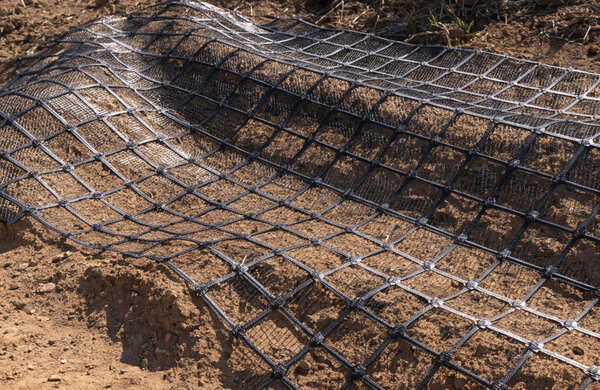
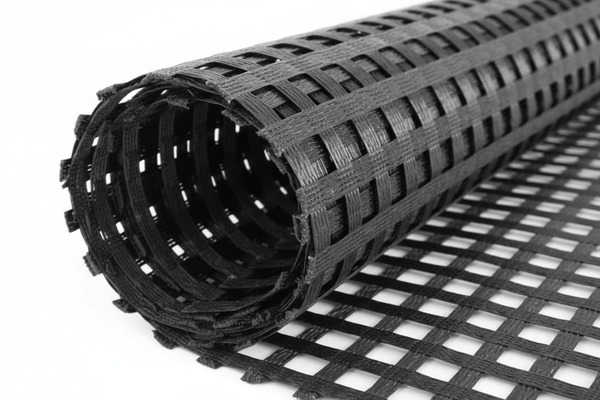
A PET geogrid is a geosynthetic material made from polyethylene terephthalate (PET) fibers, woven or knitted into a grid-like structure, primarily used in civil engineering applications for soil reinforcement due to its high tensile strength and creep resistance.
From my perspective at Langyi, we often encounter material challenges, and understanding the basic composition of materials like PET geogrids is crucial. PET is a type of polyester, known for its strength and durability. When it's formed into a geogrid, these properties are harnessed to provide stability and support in various construction projects. It's essentially a strong, flexible fabric designed to interact with soil.
Breaking Down PET Geogrids: Structure and Material
To understand how PET geogrids work, we need to look closer at their structure and the material itself. It's a combination that gives them their unique properties.
| Feature | Description | Impact on Performance |
|---|---|---|
| Material | Polyethylene terephthalate (PET) is a synthetic polymer known for high tensile strength and low elongation. | Provides excellent load-bearing capacity and dimensional stability. |
| Structure | Open grid configuration, either woven, knitted, or extruded, with integral junctions. | Allows soil particles to interlock, providing confinement and load transfer. |
| Durability | Resistant to biological degradation, chemicals, and UV radiation (with proper stabilization). | Ensures long-term performance in various soil environments. |
| Creep | Low creep characteristics, meaning it resists deformation under sustained load over time. | Critical for maintaining long-term structural integrity in reinforced slopes. |
| Manufacturing | Typically produced by weaving or knitting high-strength PET yarns, then coated for protection and stability. | Influences the geogrid's interface friction with soil and overall durability. |
When we started at Langyi, learning about these materials was fascinating. The way PET fibers are engineered into a grid allows them to effectively distribute stress over a larger area, preventing soil from moving. This means the geogrid acts like a skeleton within the soil, holding it together. The selection of PET is not accidental; its inherent strength and resistance to degradation are key. However, like any material, it has its weaknesses, which we'll discuss later. Our work at Langyi often involves finding ways to enhance these already strong materials.
What is the Purpose of a Geogrid?
Do you ever wonder why engineers bother with geogrids in big construction projects? It might seem like an extra step, but their purpose is quite vital.
The primary purpose of a geogrid is to provide soil reinforcement, improving the load-bearing capacity and stability of soil structures in civil engineering applications such as retaining walls, slopes, embankments, and pavements, by distributing stress and preventing soil movement.
In my years at Langyi, I've seen countless examples of how geogrids are fundamental to creating stable infrastructures. Imagine trying to build a tall retaining wall on loose soil; without reinforcement, it would simply collapse. Geogrids provide that critical internal strength, allowing the soil to withstand greater forces than it could on its own. They transform weak soil into a strong, composite material.
Reinforcing the Earth: Key Applications and Benefits
So, where exactly do geogrids fit into the grand scheme of things, and what benefits do they bring? It's all about making the earth more resilient.
| Application | Description | Primary Benefit |
|---|---|---|
| Retaining Walls | Used within the soil mass behind retaining walls to stabilize the backfill and reduce lateral pressure. | Increases wall stability, allows for steeper wall faces, and reduces wall thickness. |
| Embankments & Slopes | Incorporated into unstable slopes and embankments to improve shear strength and prevent landslides. | Enhances slope stability, permits steeper slopes, and minimizes land acquisition. |
| Pavement Structures | Placed beneath asphalt or concrete layers in roads, railways, and airfields. | Reduces rutting, extends pavement life, and decreases aggregate thickness requirements. |
| Load Transfer Platforms | Used over soft foundations to distribute concentrated loads from structures or fills more evenly. | Prevents differential settlement and improves the overall bearing capacity of soft soils. |
| Landfill Caps | Integrated into the capping system of landfills to provide stability and reduce settlement. | Ensures long-term integrity of the cap, preventing environmental contamination. |
The benefits of using geogrids are clear. When we at Langyi develop solutions, we always consider the end application. Geogrids help reduce the amount of aggregate needed in road construction, which saves both material and money. They allow for the construction of steeper slopes, which can maximize land use in challenging terrains. In essence, they are problem-solvers, enabling engineers to build more efficiently and more securely, even on difficult ground. The ability of geogrids to interlock with soil particles is what creates a composite material with enhanced strength, far beyond what the soil could achieve alone. This is the core of their utility.
What Are the Disadvantages of Geogrids?
While geogrids offer significant advantages, are there any drawbacks or limitations to their use? Like any material, they aren't without their challenges.
Despite their benefits, geogrids can have disadvantages such as susceptibility to installation damage, limited long-term performance in aggressive chemical environments, and degradation from UV exposure if not properly protected, potentially shortening their effective service life.
From my experience in the industry, understanding the limitations of a product is just as important as knowing its strengths. Even the best materials can fail if their weaknesses are not addressed. With geogrids, these disadvantages primarily relate to their vulnerability to certain environmental factors and improper handling during installation. It's not a deal-breaker, but it does require careful consideration.
The Achilles' Heel of Geogrids: Vulnerabilities and Challenges
So, what are these specific vulnerabilities that geogrids face, and how do they impact performance? It's about recognizing the threats to their longevity.
| Disadvantage | Description | Impact on Performance |
|---|---|---|
| Installation Damage | Geogrids can be torn, punctured, or abraded by construction equipment or sharp aggregates during placement. | Reduces effective reinforcement area and creates weak points, leading to premature failure. |
| UV Degradation | Prolonged exposure to sunlight before or during installation can degrade the polymer chains. | Weakens the material, reducing tensile strength and long-term durability. |
| Chemical Attack | Certain harsh chemicals in the soil (e.g., strong acids or bases) can react with the polymer. | Leads to chemical breakdown of the geogrid, losing its reinforcing properties. |
| Creep | Although PET has low creep, it's still a factor; continuous stress over time can cause some deformation. | Can lead to settlement or displacement in long-term critical structures. |
| Hydrolysis | For PET geogrids, water and heat can break down the ester linkages in the polymer chains. | Significantly reduces tensile strength and elongation, leading to material failure. |
When I first started at Langyi, learning about material science, I realized that hydrolysis was a particularly insidious problem for polyesters like PET. It's not just about obvious damage; hydrolysis is a chemical reaction that silently eats away at the material's strength, especially in warm, wet conditions. Imagine a bridge slowly losing its structural integrity from within; that's what hydrolysis can do. While many of these issues can be mitigated with proper design and installation, hydrolysis often requires a more proactive material-level solution, which is where our expertise at Langyi truly comes into play.
How to Extend the Service of PET Geogrid with Carbodiimide Anti-hydrolysis Agent?
Given these vulnerabilities, especially hydrolysis, how can we proactively extend the service life of PET geogrids? Is there a proven solution for these silent killers?
To effectively extend the service life of PET geogrids, particularly against hydrolysis in high-humidity and high-temperature environments, incorporating a carbodiimide anti-hydrolysis agent is crucial, as it chemically reacts with and scavenges water, preventing the degradation of the polyester chains.
This is where my experience at Langyi truly resonates. We've dedicated ourselves to finding solutions for material degradation, and carbodiimide anti-hydrolysis agents are a prime example of our mission to become a hidden champion in functional additives. I have personally witnessed how our carbodiimide products provide a robust defense against one of PET's most significant weaknesses. It's about giving materials a fighting chance against their environment.
The Carbodiimide Advantage: A Shield Against Hydrolysis
So, what exactly makes carbodiimide anti-hydrolysis agents so effective, and how do they work their magic? It's a chemical innovation designed to safeguard your PET geogrids.
| Aspect | Description | Benefit for PET Geogrids |
|---|---|---|
| Mechanism of Action | Carbodiimides react with carboxylic acid end groups formed during PET hydrolysis, consuming water and preventing further chain scission. | Effectively neutralizes the hydrolysis process, preserving the polymer's molecular weight and mechanical properties. |
| Enhanced Durability | By inhibiting hydrolysis, the agent maintains the tensile strength and elongation of PET over extended periods. | Significant extension of the geogrid's service life, especially in hot and humid conditions or acidic environments. |
| Application Method | Typically compounded directly into the PET polymer during manufacturing or applied as a coating. | Integrates seamlessly into the production process, providing internal protection throughout the material. |
| Temperature Stability | Effective across a wide range of temperatures where hydrolysis is a concern, from moderate to elevated conditions. | Ensures reliability in diverse climatic conditions and applications where heat is present. |
| Cost-Effectiveness | A small addition of carbodiimide can yield substantial returns by preventing premature failure and reducing replacement costs. | Provides long-term economic benefits by maximizing the asset's lifespan and minimizing maintenance. |
At Langyi, we believe in deep dives into material science to solve real-world problems. For PET geogrids, carbodiimide anti-hydrolysis agents act as an internal bodyguard for the polymer chains. When water tries to break down the ester linkages in PET, the carbodiimide is there to react with the byproducts of this degradation, essentially consuming the very molecules that catalyze further breakdown. This chemical scavenging action slows down the hydrolysis process dramatically. I've personally seen testing data showing how a small percentage of our carbodiimide can make a huge difference in the material's performance under accelerated aging conditions. It's not just an additive; it's a critical component for ensuring the long-term reliability and sustainability of PET geogrid projects. This is how we help our customers build with confidence, knowing their materials are protected at a fundamental level.
Conclusion
Extending the life of PET geogrids is crucial for sustainable infrastructure. By understanding their vulnerabilities, especially to hydrolysis, and utilizing solutions like carbodiimide anti-hydrolysis agents, we can significantly enhance their durability and performance.