
Are you tired of your favorite shoes falling apart too quickly, especially in humid climates? The high-performance PU sole you love might be succumbing to an invisible enemy: hydrolysis.
An anti-hydrolysis agent is crucial in PU sole materials, especially those made from polyester-based PU, to prevent premature degradation caused by moisture and heat, thereby extending the shoe's lifespan and maintaining its performance and comfort, a common solution being the addition of carbodiimide compounds.
In years at Langyi, we've seen countless material challenges, and the degradation of shoe soles due to hydrolysis is a prime example. It’s frustrating for consumers and a significant problem for manufacturers. Our mission at Langyi is to provide solutions, and protecting PU soles from the elements is a challenge we've tackled head-on.
What is PU in sole material?
Do you ever wonder what "PU" stands for when you see it on your shoe soles? It's more than just a label; it signifies a material with specific properties crucial for footwear.
In sole material, PU refers to polyurethane, a versatile polymer widely used for its excellent balance of properties including lightweight comfort, durability, flexibility, good shock absorption, and abrasion resistance, making it ideal for various types of footwear from athletic shoes to casual and formal wear.
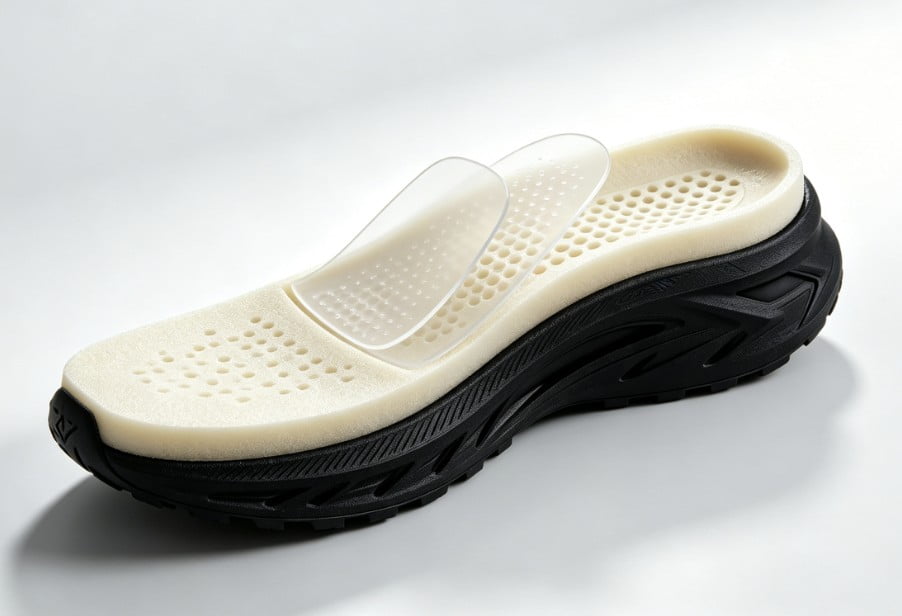
When I joined Langyi, Dr. Tang educated me on the broad applications of polymers. PU is truly a wonder material in the footwear industry. It’s what gives many shoes that comfortable, bouncy feel, while also being tough enough to withstand daily wear and tear. Unlike traditional materials like rubber, PU can be formulated to be very light, which is a huge advantage for athletic shoes where every gram counts. It's not just a material; it's a carefully engineered system that brings together comfort, performance, and durability.
The Anatomy of a PU Sole: Comfort Meets Performance
So, what makes polyurethane such a good fit for shoe soles, and how do its characteristics translate into the comfort and performance we expect from our footwear?
| Property | Description | Benefit for Sole Material |
|---|---|---|
| Lightweight | PU can be foamed to create a lightweight, porous structure. | Reduces overall shoe weight, enhancing comfort for prolonged wear and athletic performance. |
| Flexibility | Can be formulated to be highly flexible, conforming to foot movements. | Allows natural foot motion, reducing fatigue and improving walking/running efficiency. |
| Shock Absorption | The cellular structure of foamed PU effectively dissipates impact forces. | Protects feet and joints from impact stress, offering cushioning and comfort. |
| Abrasion Resistance | Exhibits good resistance to wear and tear from friction. | Ensures the sole lasts longer, even with extensive use on various surfaces. |
| Durability | Maintains its physical properties over time under normal use. | Extends the lifespan of the shoe, providing value to the consumer. |
| Design Versatility | Can be molded into intricate shapes and designs with various textures and colors. | Allows for aesthetic diversity and complex functional sole geometries. |
My years at Langyi have shown me that PU's versatility comes from its ability to be customized. Manufacturers can tweak the formulation to make it softer for maximum cushioning or harder for more support and durability. This adaptability is why you find PU in everything from squishy running shoe midsoles to tough, oil-resistant work boot outsoles. The key is finding the right balance of properties for the specific shoe type. However, there's a flip side to this versatility, particularly with polyester-based PUs, which often offer superior mechanical properties but come with a significant vulnerability.
What is the hydrolysis of PU soles?
Have you ever had a pair of shoes whose soles just crumbled or disintegrated, even if the upper looked fine? This frustrating experience is often due to the "hydrolysis of PU soles."
Hydrolysis of PU soles is a chemical degradation process where water molecules react with the ester linkages in polyester-based polyurethane, breaking down the polymer chains, which leads to a loss of mechanical properties like flexibility and strength, ultimately causing the sole to become brittle, crack, and disintegrate.
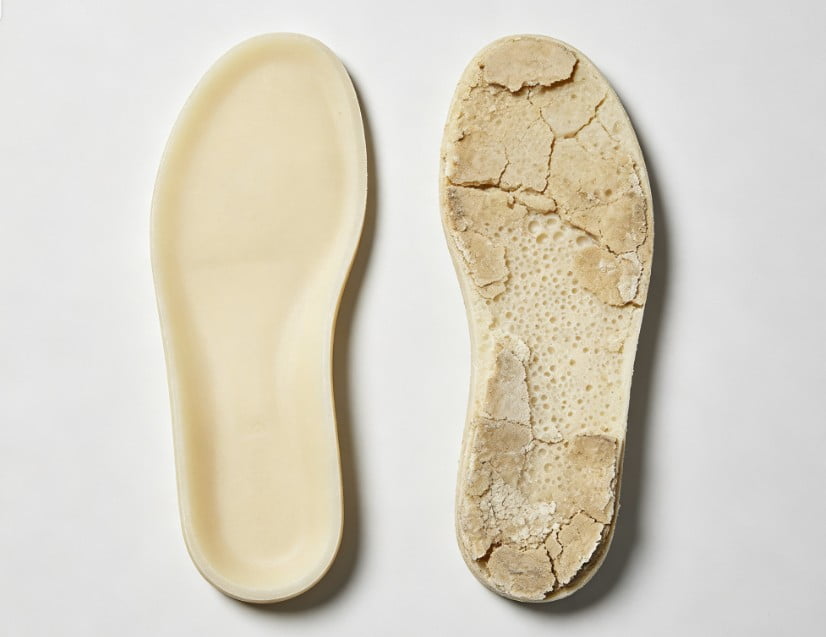
I've witnessed this problem countless times in the lab and heard stories from consumers. At Langyi, we often explain that it's like rust for metal, but for certain plastics. It's a "silent killer" because the shoe might look perfectly fine on the outside, but internally, the sole material is slowly losing its integrity. This process is accelerated by heat and humidity, which means shoes stored in warm, damp places (like a closet in a humid climate) are particularly susceptible.
The Invisible Enemy: How Hydrolysis Breaks Down Your Soles
So, how exactly does this insidious process of hydrolysis work, and what are the tell-tale signs that your PU soles are succumbing to its effects?
| Aspect | Description | Consequence for PU Soles |
|---|---|---|
| Chemical Reaction | Water molecules attack the ester bonds within the polyester polyurethane polymer backbone, splitting them apart. | Decreased molecular weight of the polymer, leading to a weaker structure. |
| Accelerating Factors | High temperature, high humidity, and prolonged exposure to moisture (e.g., sweat, rain, damp storage). | Significantly speeds up the degradation rate, causing faster material breakdown. |
| Visible Symptoms | Initially, the sole may feel sticky or oily, then become hard, brittle, and eventually crack or crumble into pieces. | Loss of cushioning, support, and sole integrity, rendering the shoe unwearable. |
| Odor | Sometimes, a rancid or unpleasant odor can accompany the degradation, due to the release of degraded components. | An unpleasant side effect, indicating advanced hydrolysis. |
| Material Type Impact | Primarily affects polyester-based PU (often chosen for its superior mechanical properties) more than polyether-based PU. | Many performance-oriented shoes are at higher risk due to polyester PU usage. |
From my early days at Langyi, Dr. Tang instilled in me the importance of not just identifying problems but understanding their root cause. Hydrolysis is a classic example. It's not physical wear and tear; it's a chemical attack. The problem is particularly acute for polyester-based PU soles because they offer excellent abrasion resistance and tensile strength, which are desirable properties for footwear. However, these benefits come at the cost of vulnerability to water. This is why addressing hydrolysis is so critical for extending the life of high-performance PU soles. We need a way to protect these desirable materials from their inherent weakness.
How to stop PU hydrolysis?
If hydrolysis is such a pervasive threat to PU soles, what practical steps can be taken to effectively prevent or significantly slow down this destructive process?
To effectively stop or significantly reduce PU hydrolysis in sole materials, especially in polyester-based PU, the most reliable method is to incorporate a carbodiimide anti-hydrolysis agent during the manufacturing process, which chemically protects the ester linkages from water attack and extends the sole's service life.
At Langyi, providing robust solutions to material challenges is what we do. I've personally seen the dramatic difference our anti-hydrolysis agents make in preventing this widespread problem. While good storage practices help, they don't solve the fundamental material vulnerability. The real solution lies in modifying the material itself. It's about designing resilience directly into the sole.
The Carbodiimide Solution: Building Resilience from Within
So, what is this carbodiimide anti-hydrolysis agent, and how does it perform its protective function within the complex matrix of a PU sole?
| Strategy | Description | Effectiveness in PU Soles |
|---|---|---|
| Carbodiimide Anti-hydrolysis Agent | These additives (like those from Langyi) react with carboxylic acid groups formed during early hydrolysis, essentially scavenging water and neutralizing degradation byproducts. | Highly effective in preventing chain scission, significantly extending sole life in hot and humid environments. |
| Material Selection | Using polyether-based PU for soles that will be exposed to high moisture or harsh environments. | Inherently more resistant to hydrolysis, but may compromise on some mechanical properties (e.g., abrasion resistance) compared to polyester PU. |
| Protective Coatings | Applying a moisture-resistant coating to the finished sole. | Can offer some surface protection, but may not prevent internal hydrolysis if moisture penetrates. Less effective for bulk protection. |
| Proper Storage | Storing shoes in cool, dry environments, away from direct sunlight and humidity. | Helps slow down the process, but does not eliminate the material's inherent susceptibility. It's a management strategy, not a solution. |
| Formulation Optimization | Adjusting the PU formulation (e.g., higher crosslink density, specific additives) to improve overall stability. | Can enhance general durability, but less specific to hydrolysis than dedicated anti-hydrolysis agents. |
In my professional opinion, honed from years of developing functional additives at Langyi, relying solely on storage or material selection (and sacrificing desired properties) isn't the optimal solution for PU soles. The carbodiimide anti-hydrolysis agent is a game-changer. It works on a chemical level, within the PU matrix, to actively combat the hydrolysis reaction. We've conducted numerous tests showing how a small percentage of these additives can double or even triple the expected lifespan of polyester PU soles under accelerated aging conditions. This means shoe manufacturers can continue to use the desirable, high-performance polyester PU, confident that their products will withstand the rigors of real-world conditions and significantly extend the shoe's service life, leading to happier customers and a better brand reputation.
Which sole is better, TPR, PU or EVA?
When choosing footwear, many wonder about the best sole material. Is there a definitive "better" among TPR, PU, and EVA?
There isn't a single "better" sole material among TPR, PU, and EVA; each offers distinct advantages and disadvantages, making the "best" choice dependent on the specific application, desired performance characteristics like comfort, durability, weight, and cost, and the expected environmental conditions.
At Langyi, we avoid generalizations when it comes to materials. While I champion PU for its versatility, I also recognize that different materials serve different purposes. It’s like asking which tool is better: a hammer, a screwdriver, or a wrench. Each excels at its intended task. The same applies to sole materials in footwear design.
Comparing Sole Materials: A Functional Breakdown
Let's break down the common characteristics and ideal uses for each of these popular sole materials to understand their respective strengths and weaknesses.
| Sole Material | Key Characteristics | Advantages | Disadvantages | Ideal Applications |
|---|---|---|---|---|
| TPR | Thermoplastic Rubber; blend of rubber and plastic. Good flexibility, grip, and abrasion resistance. | Durable, good traction, relatively inexpensive, easy to mold. | Heavier than PU/EVA, less cushioning, can be less flexible in cold. | Casual shoes, sandals, children's shoes, outsoles where grip is key. |
| PU | Polyurethane; can be rigid or foamed. Excellent cushioning, lightweight, good durability, flexible. | Superior shock absorption, lightweight comfort, good insulation. | Polyester PU susceptible to hydrolysis, can be more expensive than TPR/EVA. | Athletic shoes (midsole), comfort shoes, fashion shoes, work boots. |
| EVA | Ethylene-vinyl acetate; a foamed plastic material. Very lightweight, soft, flexible, good shock absorption. | Extremely lightweight, excellent cushioning, very flexible. | Less durable than PU/TPR, can compress over time, poor abrasion resistance. | Running shoe midsoles, flip-flops, insoles, very lightweight casual shoes. |
My experience at Langyi constantly reinforces that material selection is a balancing act. For instance, if you need a very lightweight, super-cushioned running shoe for short distances, EVA might be the top choice for the midsole. If you need a more durable, supportive midsole for everyday wear or a work boot, PU would likely be preferred. And for an outsole that needs excellent grip and long-lasting wear at a lower cost, TPR could be the answer. The key for manufacturers is to choose the material that best matches the shoe's intended use and price point, while addressing any inherent weaknesses—like using an anti-hydrolysis agent in PU soles to combine its superior performance with extended durability. It's about optimizing for the specific need, not just picking a generic "best."