
Your solar panels are degrading faster than expected, hurting your return on investment. The choice of encapsulant film—a detail often overlooked—is a critical factor in their long-term performance.
For ultimate performance in sensitive modules like TOPCon and HJT, pure POE is the top choice. For standard PERC panels, high-quality EVA is cost-effective. The market is now bridging this gap with advanced EVA formulations and composite EPE films to balance performance and cost.
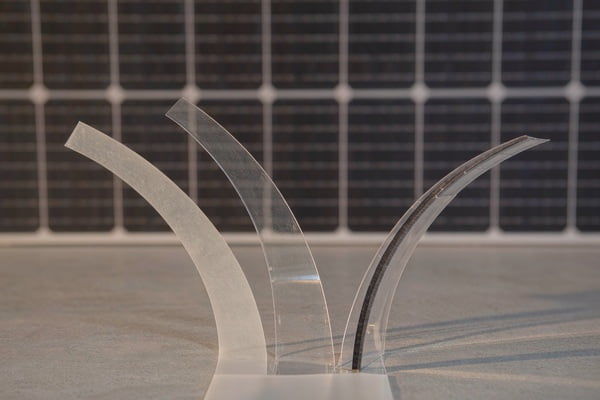
The choice of encapsulant film has become more complex than a simple A-or-B decision. As solar technology advances, the materials used to protect the cells must evolve as well. Understanding these materials is the first step to ensuring your solar modules deliver their promised power for decades. Let's explore the key differences and how the market is adapting.
How Do EVA and POE Fundamentally Protect PV Modules?
It seems simple: a plastic film to protect the solar cells. But this film is a highly engineered component, and its chemical nature determines if a module thrives or fails.
Both EVA and POE bond the module layers, provide electrical insulation, and form a barrier against the elements. However, their core chemical difference—EVA's potential to form acid versus POE's inherent stability—is the key to long-term reliability and PID resistance.
The encapsulant performs three critical jobs, but its success hinges on its chemical makeup.
1. Structural Adhesion and Insulation
First, the film acts as a hot-melt adhesive, bonding the glass, cells, and backsheet into a solid, laminated unit. It must also provide strong electrical insulation to prevent current leakage and ensure safety. Both materials are designed to do this well.
2. The Environmental Barrier
This is where the materials truly differ. An encapsulant must shield the cells from moisture. EVA (Ethylene Vinyl Acetate) contains acetate groups in its polymer chain. When exposed to heat and humidity over many years, these can react with water to form acetic acid. This acid can corrode the delicate silver gridlines on the cells and dramatically worsen Potential-Induced Degradation (PID).
POE (Polyolefin Elastomer), in contrast, has a saturated polymer backbone. It is chemically stable and contains no groups that can form acid. This inherent stability makes it a far superior long-term barrier against the chemical reactions that degrade solar cells.
How Do They Compare on PID, Moisture, Durability, and Cost?
You need to know how these chemical differences translate into real-world performance and cost. The trade-offs are significant and have driven the latest innovations in the market.
POE decisively wins on performance, offering excellent resistance to PID and moisture. EVA wins on cost, as it is a mature and widely used material. This performance-versus-cost conflict is the primary reason the market has evolved beyond this simple choice.

Faced with this clear trade-off, the solar industry didn't just pick one material over the other. It innovated. This has led to two major trends that seek to capture the benefits of POE without its full cost.
Market Trend 1: The EPE Structural Solution One popular solution is the co-extruded EPE film. This is a multi-layer "sandwich" film with a structure of EVA-POE-EVA. The idea is clever: place a thin, central layer of high-performance POE to act as the primary moisture and PID barrier. The outer layers of less-expensive EVA are used for adhesion to the glass and backsheet. This structure delivers much of the performance benefit of pure POE at a more moderate price point.
Market Trend 2: The Additive Chemical Solution A parallel trend is to chemically upgrade the EVA material itself. Rather than relying on a multi-layer structure, manufacturers can incorporate advanced functional additives directly into the EVA resin. This approach can create a high-performance, single-layer EVA film that offers "POE-like" PID resistance and durability. As a functional additives manufacturer, Langyi offers a range of solutions that improve these exact factors.
How do Anti-PID Masterbatches Upgrade EVA Film?
You want the performance of POE but the processability and cost of EVA. Is there a way to upgrade your existing EVA production line without a complete overhaul?
Anti-PID masterbatch is a concentrated additive package mixed into standard EVA resin during film extrusion. It chemically enhances the EVA by increasing resistivity and neutralizing harmful ions, providing POE-like PID resistance in a cost-effective, single-layer film.
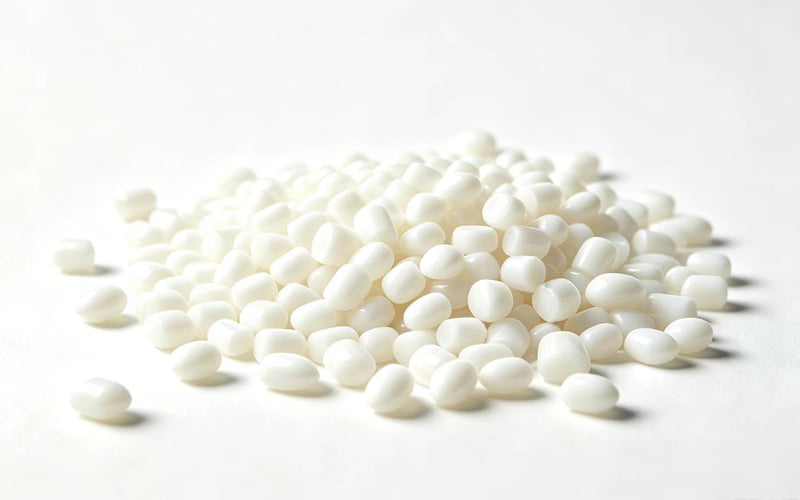
This "chemical solution" represents a powerful way to create high-performance encapsulants. Instead of relying on a complex multi-layer film like EPE, a manufacturer can use anti-PID masterbatch to elevate the properties of standard EVA resin. The masterbatch consists of concentrated functional additives blended into a carrier resin for easy dosing. During the film extrusion process, the masterbatch is mixed in, dispersing these additives throughout the EVA film. These additives work in several ways:
- Increased Volume Resistivity: Some additives increase the film's electrical resistance, making it much harder for leakage currents that drive PID to flow through the encapsulant.
- Ion Scavenging: Other additives are designed to trap or "scavenge" mobile ions, particularly sodium ions (Na+) from the glass, immobilizing them so they cannot cause degradation.
- Acid Neutralization: Certain additives work to neutralize any acetic acid that may form, preventing it from corroding the cell's metallization.
This approach gives film manufacturers the flexibility to create a high-performance EVA that closes the gap with POE. It is an effective strategy for producing reliable films for both traditional p-type and modern n-type solar modules.
Conclusion
Choose your encapsulant wisely by matching it to your needs. Pure POE is for maximum performance. Standard EVA is for cost-sensitive projects. To balance cost and reliability, use EPE films or, increasingly, an EVA upgraded with anti-PID masterbatch.