
Your PLA filament snaps mid-print, ruining hours of work. This frustrating brittleness wastes time and material, and it makes your 3D printing process unreliable and expensive.
You can stop PLA filament from becoming brittle by protecting it from moisture damage (hydrolysis). The most effective way is to add a carbodiimide anti-hydrolysis agent during manufacturing. This additive keeps the PLA flexible and strong for a much longer time.
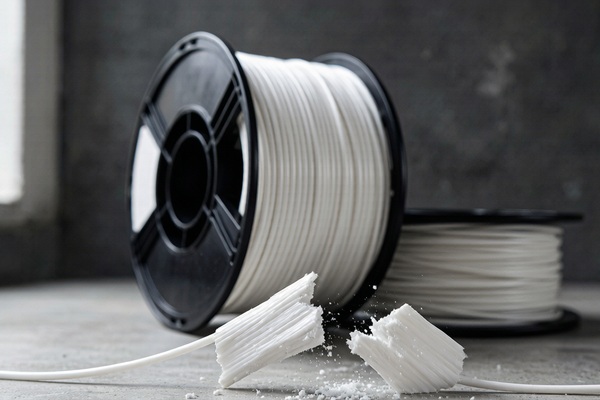
I once consulted for a large 3D printing farm that was having major issues with filament consistency. They were throwing away dozens of spools that had become too brittle to use, even some that were only a few months old. Their first thought was that their supplier was bad. But after talking, we realized the problem was storage in a high-humidity environment. PLA is a fantastic material, but its biodegradable nature is also its biggest weakness. It naturally wants to break down when exposed to moisture. This experience showed me that many users blame the filament, when the real issue is the material’s inherent chemistry. Understanding this is the first step to creating a truly superior and reliable product.
How Long Until PLA Becomes Brittle?
You buy PLA filament expecting it to last. But when you finally open that box for a project, it's brittle and snaps easily, wasting your money and delaying your work.
PLA can become brittle in as little as 6 to 12 months, and even faster in humid conditions. This happens because moisture in the air breaks down the polymer chains through hydrolysis, making the material weak and inflexible.
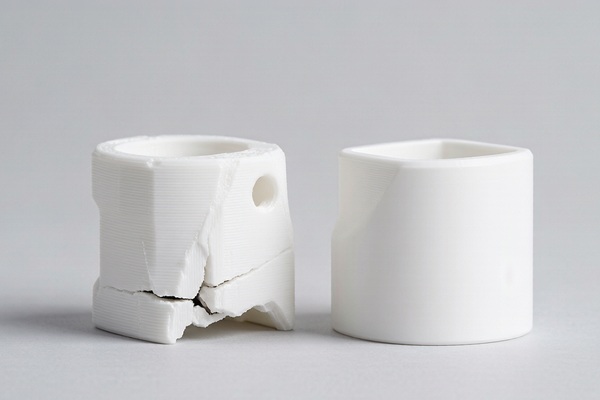
PLA, or polylactic acid, is a type of polyester. This chemical structure makes it sensitive to water. The process is called hydrolysis. Water molecules from the humidity in the air attack the ester bonds in the PLA polymer chains. This attack breaks the long, strong chains into shorter, weaker ones. As the average chain length (or molecular weight) decreases, the material loses its toughness and flexibility. It becomes brittle. The speed of this process depends almost entirely on the environment. Proper storage is a temporary fix, but the real solution lies in improving the material itself.
The Impact of Environment on PLA Lifespan
| Storage Condition | Relative Humidity (RH) | Temperature | Estimated Time to Brittleness |
|---|---|---|---|
| Sealed Bag w/ Desiccant | < 15% | Room Temp | 2+ years |
| Open Air, Dry Climate | ~30% | Room Temp | 1-2 years |
| Open Air, Standard Room | ~50% | Room Temp | 6-12 months |
| Humid Climate / Workshop | > 70% | Warm | 1-3 months |
As you can see, humidity is the primary enemy of PLA filament longevity. For a filament manufacturer, you cannot control your customer's storage conditions. This is why building protection directly into the filament is so important.
How Can You Strengthen PLA Filament?
Your 3D printed PLA parts look great but they lack real strength. They crack or break easily under stress, making them unreliable for functional prototypes or end-use products.
To strengthen PLA filament, you can add a carbodiimide anti-hydrolysis agent during the extrusion process. This additive chemically repairs broken polymer chains and consumes moisture, significantly increasing the material's toughness and preventing brittleness from developing.
Simply drying filament is a temporary fix for a permanent problem. The real way to strengthen PLA is to improve its core chemistry. A carbodiimide anti-hydrolysis agent does exactly that. It works in two powerful ways. First, it actively seeks out and neutralizes water molecules within the plastic, stopping hydrolysis before it can even start. Second, it acts as a "molecular repair kit." When hydrolysis does manage to break a polymer chain, the carbodiimide finds the two broken ends and chemically re-links them. This process is often called chain extension.
The Chemistry of Strengthening PLA
This chain extension doesn't just prevent the PLA from getting weaker; it can actually make it stronger. By constantly repairing and reconnecting polymer chains, the carbodiimide helps maintain a high molecular weight. A higher molecular weight directly translates to better mechanical properties. This includes improved tensile strength, higher impact resistance, and much greater flexibility. At Langyi, our entire focus as material scientists is on these types of functional additives. We provide solutions that upgrade a material from the inside out, turning a standard polymer into a high-performance one. Adding an anti-hydrolysis agent transforms PLA from a simple prototyping material into something durable enough for functional parts.
How Can You Improve the Overall Performance of PLA 3D Printed Parts?
Your finished PLA parts look good right after printing but weaken and deform over time. This makes them unsuitable for anything other than short-term display pieces, limiting their practical value.
To improve the long-term performance of PLA parts, you must use a filament that contains a carbodiimide anti-hydrolysis agent.See more about HyMax anti-hydrolysis agent in PLA This protection is built into the material, so the final printed object resists moisture, heat, and aging for much longer.
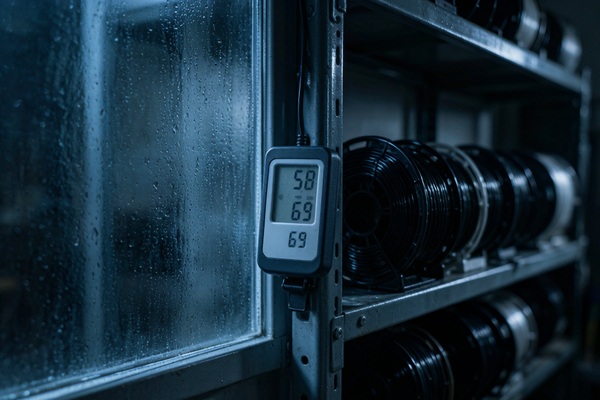
The benefits of an anti-hydrolysis agent are not just for the filament on the spool. They directly transfer to the final printed part, giving it a dramatically longer and more useful life. When you print with standard PLA, you are creating an object that has an internal countdown clock. Exposure to everyday humidity and temperature will slowly degrade it. But when you print with PLA that has been stabilized with a carbodiimide, you are creating a much more permanent object. The additive continues to work inside the solid plastic, protecting it from the environment year after year.
From Filament Quality to Part Longevity
This built-in protection leads to several key performance improvements in the final part. It greatly extends the service life. A part that might become brittle and fail within a year in a normal environment can last for many years without losing its strength. It also improves thermal stability. The stronger, more robust polymer network is better at resisting deformation at elevated temperatures. This means the part can be used in more demanding applications, like inside a car on a warm day.
| Property | Standard PLA Part | Stabilized PLA Part (with Carbodiimide) |
|---|---|---|
| Service Life (Humid Conditions) | Poor (Degrades in <1 year) | Excellent (Lasts for years) |
| Impact Resistance Over Time | Decreases significantly | Stays high |
| Thermal Stability | Moderate | Improved |
| Resistance to Brittleness | Low | Very High |
By adding this one key ingredient, you change the fundamental nature of the PLA. It becomes a more serious engineering material, capable of producing durable, reliable, and long-lasting products.
Conclusion
PLA becomes brittle because of moisture damage, a process called hydrolysis. Adding a carbodiimide anti-hydrolysis agent is the key to preventing this, ensuring strong filament and durable, long-lasting printed parts.