
Are your plastic products failing sooner than expected? This degradation costs money and damages your reputation. You can extend their life and maintain performance with the right protective additive.
An anti-hydrolysis agent is a chemical additive that protects polymers from degradation caused by water and humidity. It works by neutralizing the acidic substances that accelerate this breakdown process, preserving the material's strength, flexibility, and overall lifespan in demanding environments.
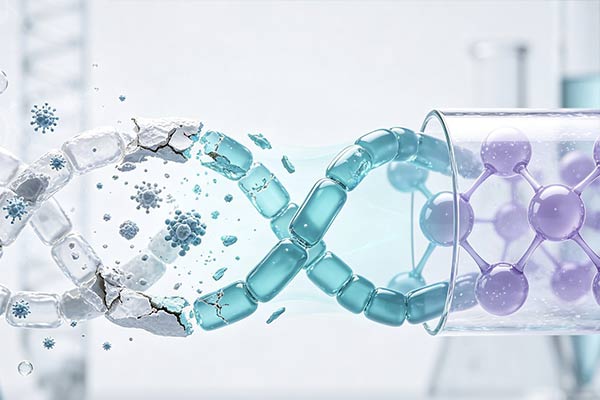
When I first joined Langyi, I saw firsthand how material science could solve real-world problems. Our founder, Dr. Tang, always focused on finding the root cause of material failure. One of the most common issues we encountered was hydrolysis, where materials simply fall apart because of moisture. It seemed like a simple problem, but it was causing major headaches for manufacturers in many industries. Understanding how to stop this process is key to creating durable, long-lasting products. Let's explore how these amazing additives work and where they can make a difference.
What is an anti-hydrolysis agent used for?
Your products face harsh conditions daily. Exposure to heat and humidity can cause critical parts to degrade and fail. These agents are designed to protect materials in these exact situations.
Anti-hydrolysis agents are primarily used to protect polymers that are sensitive to moisture, such as PET, PBT, PU, and PLA. Key applications include automotive parts, electronic components, industrial fibers, and biodegradable plastics, where they significantly extend the product’s service life.
An anti-hydrolysis agent's job is to stop a material from breaking down when it comes into contact with water or humidity. This process, called hydrolysis, is a major problem for certain types of plastics known as polyesters and polyamides. I remember a client in the automotive industry who was having issues with under-the-hood components. The combination of engine heat and environmental moisture was causing plastic connectors to become brittle and crack. By incorporating an anti-hydrolysis agent into their material, we helped them solve the problem. The agent preserves the polymer's molecular structure, which is what gives the plastic its strength and durability. This protection is critical in many areas.
Here are some of the most common applications:
| Industry | Polymer Examples | Common Applications | Why it's needed |
|---|---|---|---|
| Automotive | PET, PBT, PA | Engine covers, connectors, sensors | Resists high heat and humidity |
| Electronics | PBT, PET | Cable sheathing, housings, connectors | Maintains electrical insulation properties |
| Industrial | PET fibers, PU rollers | Monofilaments, filter fabrics, shoe soles | Extends life under mechanical stress and moisture |
| Bioplastics | PLA, PHA | Packaging, cutlery, agricultural film | Controls degradation rate for better usability |
How do anti-hydrolysis additives prevent material degradation?
The science behind polymer failure can seem complicated. Without understanding the "why," you risk using the wrong solution for a critical problem. But the mechanism is actually a straightforward chemical reaction.
Anti-hydrolysis agents work by seeking out and neutralizing the acidic molecules that trigger hydrolytic degradation. The agent, often a carbodiimide, reacts with these acids, converting them into a stable, harmless substance and stopping the chain-scission reaction before it compromises the polymer’s integrity.
To understand how these additives work, we first need to look at the problem: hydrolysis. When a polymer like PET is exposed to moisture, especially at high temperatures, the long molecular chains that give the plastic its strength start to break apart. This reaction is accelerated by the presence of acids. These acids can come from the manufacturing process itself or from the environment. Each time a chain breaks, it creates a carboxylic acid end group (-COOH), which then acts as a catalyst to break more chains. It's a chain reaction that causes the material to become brittle and weak.
An anti-hydrolysis agent, like our HyMax® carbodiimide, is designed to stop this process. The carbodiimide molecule is highly reactive and specifically targets these acid end groups. It chemically bonds with the acid, forming a stable and harmless urea derivative. By "scavenging" or removing the acid catalyst from the system, the agent effectively shuts down the degradation cycle. This simple but powerful action preserves the polymer's molecular weight and, in turn, its mechanical properties like tensile strength and impact resistance. It’s a targeted solution that protects the material from the inside out.
What are the most effective anti-hydrolysis agents for industrial use?
Many additives claim to protect polymers. Choosing the wrong one can be a waste of money or, worse, harm your final product. For true, reliable protection, one class of chemistry stands out.
Carbodiimide-based additives are widely considered the most effective anti-hydrolysis agents, especially for polyesters like PET and PBT. They offer superior efficiency in neutralizing acids, form stable byproducts, and have minimal impact on the final product's properties, making them a top choice for industry.

Over my 15 years at Langyi, I have seen different technologies come and go, but carbodiimides have remained the gold standard for hydrolysis resistance. While other chemistries like epoxy compounds exist, they often have limitations. They can be less reactive, require higher processing temperatures, or sometimes cause unwanted side effects like yellowing of the final product. Carbodiimides, on the other hand, are highly efficient and specifically designed for this task. As the first company in China to develop and manufacture them, we have dedicated countless hours to perfecting their performance.
The effectiveness of carbodiimide stems from its unique chemical structure. It reacts quickly and irreversibly with the acids that cause degradation, essentially removing them from the equation.
| Feature | Carbodiimide Agents | Other Agents (e.g., Epoxy) |
|---|---|---|
| Efficiency | Very high, scavenges acids quickly | Moderate to low |
| Byproducts | Stable, inert urea derivatives | Can be unstable or reactive |
| Processing | Good thermal stability | Can require specific temperatures |
| Color Impact | Minimal to none | Can cause yellowing or discoloration |
| Compatibility | Excellent with polyesters, polyamides | Varies, may have side reactions |
However, simply choosing a carbodiimide is not the final step. To get the best performance, you need the right grade and the correct dosage for your specific polymer and application. This is where partnering with a specialist like Langyi becomes crucial. We help our clients fine-tune their formulations to achieve maximum stability without affecting other properties.
Conclusion
In short, anti-hydrolysis agents are vital for protecting polymers from moisture. Carbodiimides are the most effective choice, preserving material strength and extending product life by neutralizing harmful acids.