
Are you tired of pressure-sensitive tapes that leave a sticky, gummy mess behind? This residue looks unprofessional and is a hassle to clean, damaging surfaces and your product's reputation.
Polycarbodiimide can significantly reduce tape residue by acting as a crosslinker. It increases the adhesive's internal strength, or cohesion, ensuring the adhesive layer removes as one piece instead of splitting and leaving a sticky film on the surface.
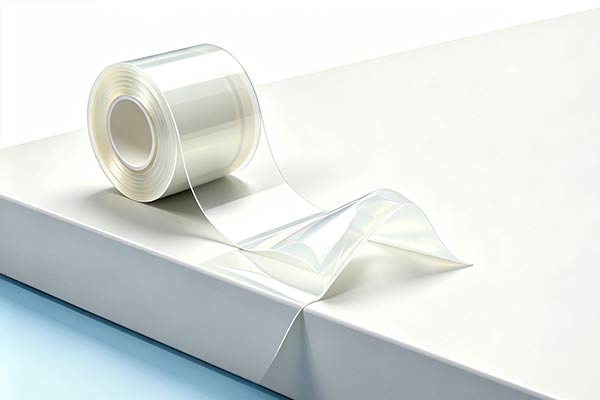
At Langyi, we often help clients solve frustrating material problems. One of the most common complaints I hear is about tape residue. A customer came to us a few years ago because their high-performance industrial tapes were failing quality control. The tapes stuck perfectly, but they left a terrible residue upon removal, which was unacceptable for their end-users in the electronics assembly sector. The problem wasn't that the adhesive was bad; it was just unbalanced. The glue was sticking to the surface better than it was sticking to itself. This is a classic challenge in adhesive science, and it’s where understanding the chemistry of additives can make all the difference. Let's look at why this happens and how a specific additive can fix it.
Why Do Pressure-Sensitive Adhesive Tapes Leave Residue?
You peel back a piece of tape, and a sticky film remains. This common frustration can ruin a finished product. Understanding the science behind this failure is the first step to preventing it.
Tape leaves residue when the adhesive's attraction to the surface (adhesion) is stronger than its internal strength (cohesion). This imbalance causes the adhesive layer to split apart during removal, leaving a portion of itself stuck to the surface.
The performance of any pressure-sensitive adhesive (PSA) depends on a delicate balance between two forces: adhesion and cohesion. Adhesion is the force that makes the tape stick to a surface. Cohesion is the internal strength of the adhesive that holds it together as a single layer. Think of it like a group of people holding hands to form a chain. Cohesion is how tightly they hold hands with each other. Adhesion is how strongly the people at each end of the chain are holding onto a wall. If their grip on the wall is stronger than their grip on each other, the chain will break in the middle when you pull on it. This is exactly what happens with tape residue. The adhesive splits because its internal strength is not enough to overcome its bond to the surface.
| Failure Type | Description | Result |
|---|---|---|
| Adhesive Failure | The bond between the adhesive and the surface breaks. | Clean removal. The tape peels off with all the adhesive intact. |
| Cohesive Failure | The adhesive layer itself splits and breaks. | Residue. Part of the adhesive is left on the surface. |
This cohesive failure is the root cause of tape residue. The solution, therefore, is to find a way to make the adhesive molecules hold onto each other more strongly.
How Does Polycarbodiimide Improve PSA Cohesive Strength?
Your adhesive is tearing itself apart, leaving a mess. This cohesive failure undermines your product's quality. A targeted chemical additive can build strength from within to solve this exact problem.
Polycarbodiimide acts as a crosslinker, forming strong chemical bonds between the polymer chains within the adhesive. This creates a robust three-dimensional network, dramatically increasing the adhesive's internal cohesion and preventing it from splitting during removal.
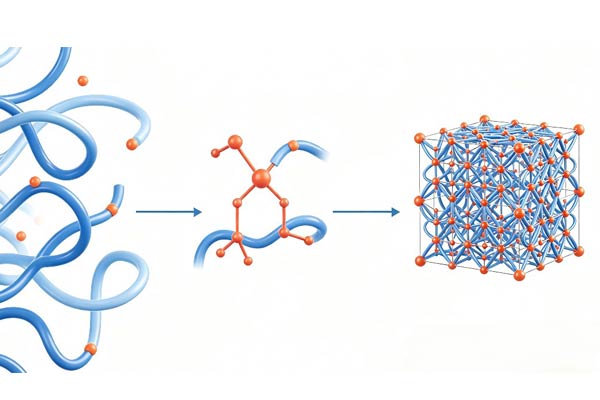
This is where the material science gets interesting. Polycarbodiimides, like our HyMax CA series, are specifically designed to build this internal strength. Many PSAs, especially water-based acrylics, have functional groups like carboxylic acid (-COOH) in their polymer structure. The carbodiimide molecule is highly reactive and seeks out these acid groups on different polymer chains. When it finds them, it creates a strong, stable covalent bond, effectively "tying" the chains together. This process is called crosslinking. Instead of individual polymer chains that can slide past each other, you now have a single, interconnected molecular network.
I remember working with a client who made protective films for smartphone screens. They needed the film to stick securely but remove cleanly without any hint of residue. Their initial formula had great adhesion but failed on clean removal. We worked with them to add a very small amount of a polycarbodiimide crosslinker. By carefully adjusting the dosage, we found the sweet spot. A dosage of just 1% was enough to build the cohesive strength needed for clean removal, without making the adhesive too hard or reducing its stickiness. This highlights that dosage is critical—too little and it won't work, too much and you can ruin the adhesive properties.
How Do You Balance Clean Removal with Tack and Peel Adhesion?
You’ve increased cohesion and stopped residue, but now your tape doesn't stick well. Solving one problem created another. Achieving the perfect adhesive requires a delicate and intentional balancing act.
You balance these properties by carefully controlling the crosslinking density with polycarbodiimide. The goal is to increase cohesion just enough for clean removal, without sacrificing the tack (initial stickiness) and peel adhesion (removal force) needed for the specific application.
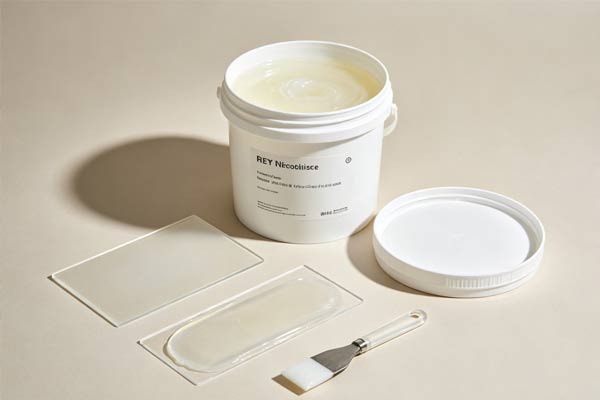
Achieving the perfect PSA is a three-way balancing act between cohesion, adhesion, and tack. These three properties are often in opposition. If you increase one too much, you almost always decrease another. This is the central challenge for any adhesive formulator. Polycarbodiimide is a powerful tool in this process, but it must be used with precision.
Here is how these properties interact when you add a crosslinker:
- Tack: This is the initial "grab" or stickiness of the tape with very light pressure. Highly crosslinked adhesives are stiffer on a molecular level and don't flow as easily to wet the surface, which often leads to lower tack.
- Peel Adhesion: This is the force required to pull the tape off a surface. As you increase crosslinking, peel adhesion will often increase to a point and then drop off as the adhesive becomes too hard and rigid.
- Cohesive Strength: This is the internal strength that prevents residue. Crosslinking directly and significantly increases cohesion.
| Crosslinking Level | Cohesion (Residue Risk) | Tack (Initial Stickiness) | Peel Adhesion | Best Use Case |
|---|---|---|---|---|
| Low | Low (High Residue Risk) | High | High | Permanent bonding tapes. |
| Medium (The Sweet Spot) | High (Low Residue Risk) | Good | Good | Removable tapes, masking tapes, protective films. |
| High | Very High (No Residue) | Low | Low | Low-tack tapes, can be too weak to stick. |
The key is finding that "sweet spot" for your specific application. The right balance for a gentle painter's tape is completely different from a heavy-duty mounting tape. It requires rigorous testing, adjusting the polycarbodiimide dosage, cure time, and temperature until the desired performance is met. It’s this dedication to testing and formulation that turns a good adhesive into a great one.
Conclusion
Polycarbodiimide reduces tape residue by crosslinking the adhesive to boost its cohesive strength. The key is carefully balancing this cohesion with tack and peel adhesion through testing for optimal performance.