
Your PLA/PBAT compound is losing strength, causing production headaches and quality concerns. But the solution isn't always the same. You need to pick the right additive for the job.
The choice is simple. Use a chain extender1 like HyMax KL-180 to fix processing issues like low melt strength. Use an anti-hydrolysis agent2 like HyMax 210 or HyMax 1010 to protect the final product's durability against heat and moisture over time.
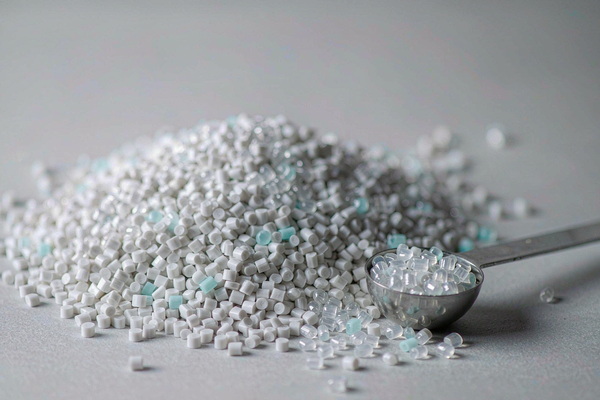
Having been with Langyi for over 15 years, I've seen many clients wrestle with this exact problem. They know something is wrong with their PLA/PBAT blend, but they are not sure which additive is the right tool to fix it. Let's walk through it together, so you can make the right choice for your product.
Why Does Your PLA/PBAT Compound Lose Its Performance?
Your PLA/PBAT products look great initially, but they become weak or brittle later. This uncertainty is frustrating and costly. Let's find out why it happens.
Performance loss in PLA/PBAT compounds often comes from four main culprits. These are residual moisture before processing, harsh processing conditions, insufficient melt strength, or hydrolysis during the product's service life. Identifying the root cause is the first step to a reliable solution.
To solve a problem, you first need to understand it. In my experience, performance issues in polyester blends like PLA/PBAT almost always trace back to one of these areas. Let's look at each one more closely.
1. Residual Moisture Before Processing
PLA and PBAT are polyesters, which means they are sensitive to water. If the raw material pellets are not dried properly before melt processing, the water molecules will react with the polymer at high temperatures. This reaction, called hydrolysis, breaks the long polymer chains, reducing the material's molecular weight and weakening it before it even becomes a product.
2. Excessive Processing Conditions
Heat and time are also enemies of polyesters. If your extruder's temperature is too high, or if the material stays in the barrel for too long, it can start to degrade. This thermal degradation also shortens polymer chains. This is a common issue when using recycled material, which has been through at least one heat cycle already.
3. Insufficient Melt Strength
Melt strength is the material's ability to hold its shape while it's molten. For processes like film blowing or extrusion, this is critical. If your PLA/PBAT blend has low melt strength, you might see unstable film bubbles, sagging profiles, or a very narrow processing window where things work correctly. This directly impacts production efficiency.
4. Hydrolysis During Storage and Service
The battle isn't over after the product is made. If the final product is used in a warm, humid environment, hydrolysis can slowly continue. Over weeks or months, the polymer chains break down, causing the product to lose its strength, flexibility, and toughness. This is a major concern for products that need a long service life.
What Does a Chain Extender Actually Do in PLA/PBAT?
You're trying to process PLA/PBAT, but the melt is too runny and weak. It's causing defects and slowing down your production line. A chain extender is designed to solve this.
A chain extender is a reactive additive that works during melt processing. It acts like molecular glue, finding the ends of broken polymer chains and reconnecting them. This makes the chains longer, increasing molecular weight, boosting melt viscosity, and improving overall melt strength.
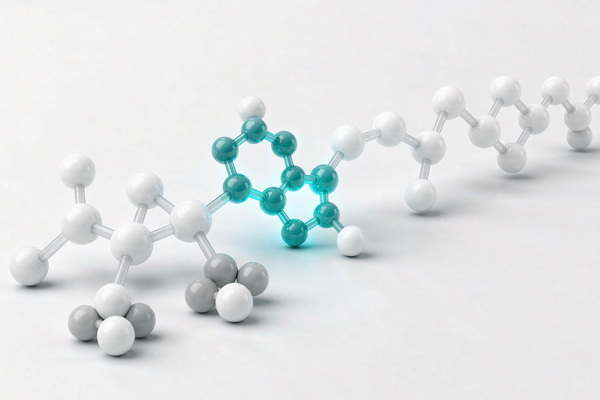
Think of a chain extender as a processing aid that fixes problems inside your extruder. Its primary job is to counteract the degradation that happens during melt processing. By rebuilding the polymer's molecular structure, it directly addresses issues of low viscosity and poor melt strength. This is especially useful when you're working with recycled PLA/PBAT, which often has a lower molecular weight and viscosity from its previous life. It helps restore the material's processability, making it behave more like virgin resin. A chain extender helps you achieve a stable process and a consistent product, especially in demanding applications like film blowing or foaming where melt stability is key.
As a part of our solutions, HyMax KL-180 is a chain extender that can be evaluated in PLA/PBAT compounds where improved melt strength, molecular weight development or processing stability is required. Its performance depends on the polymer grade, moisture content, formulation and reactive extrusion conditions.
What Does an Anti-Hydrolysis Agent Do for PLA/PBAT?
Your finished product is strong at first, but it doesn't last. After some time in storage or with a customer, it becomes brittle and fails. An anti-hydrolysis agent prevents this.
An anti-hydrolysis agent is a stabilizing additive. Its job is to protect the final product throughout its service life. It works by actively seeking out and neutralizing the causes of hydrolysis, like moisture and acidic byproducts, stopping them from breaking down the polymer chains.
While a chain extender fixes problems during processing, an anti-hydrolysis agent is a guardian for the product's future. It ensures the material maintains its properties, like strength and flexibility, even when exposed to heat and humidity for long periods. The effectiveness of this additive is not something you see on the production line; it's proven through accelerated aging tests3. A lab might perform a hydrothermal aging test, exposing samples to conditions like 85°C and 85% relative humidity for hundreds of hours. A good anti-hydrolysis agent will ensure the material retains a high percentage of its original mechanical properties after this test. It provides long-term insurance against premature failure.
At Langyi, we offer solutions for this. HyMax 210 and HyMax 1010 are anti-hydrolysis agents that can be evaluated for improving the hydrolytic stability of PLA/PBAT compounds. Product selection should consider processing temperature, end-use conditions, regulatory requirements and the required aging performance. See more about application of anti-hydrolysis agent in PLA/PBAT
Chain Extender vs Anti-Hydrolysis Agent: How to Choose for PLA/PBAT?
You know you need an additive for your PLA/PBAT, but choosing the wrong one wastes time and money. You need a clear guide to make the right decision, right now.
The answer lies in when the problem occurs. For issues during processing, like low melt strength or a drop in viscosity, choose a chain extender like HyMax KL-180. For long-term durability issues after the product is made, choose an anti-hydrolysis agent like HyMax 210 or HyMax 1010.
Making the right selection is about correctly diagnosing your problem. The table below provides a direct comparison to help you choose between our HyMax products for your PLA/PBAT application.
| Selection Factor | HyMax KL-180 | HyMax 210 | HyMax 1010 |
|---|---|---|---|
| Product Role | Chain extender | Anti-hydrolysis agent | Anti-hydrolysis agent |
| Main Purpose | Melt strength and processing improvement | Hydrolysis resistance | Hydrolysis resistance |
| Typical Problem | Low viscosity or insufficient melt strength | Performance loss under moisture and heat | Performance loss under moisture and heat |
| Typical Processing | Melt compounding / reactive extrusion | Melt compounding | Melt compounding |
| PLA/PBAT Suitability | Yes | Yes | Yes |
| Food-Contact | Contact for details | Selected applications, subject to compliance confirmation | Contact for details |
| Recommended Test | MFR, rheology, torque, mechanical properties | Hydrothermal aging and property retention | Hydrothermal aging and property retention |
You should choose HyMax KL-180 when your main problem is insufficient melt strength, excessive melt flow, processing instability, or molecular weight loss during melt processing. HyMax KL-180 can also help on compatibility of PLA/PBAT to some extent.
On the other hand, you should evaluate HyMax 210 or HyMax 1010 when your primary goal is to reduce hydrolytic degradation and retain mechanical performance after the product is exposed to heat and moisture.
For selected food-contact applications, HyMax 210 may be considered when the applicable regulatory documentation supports the target market and intended conditions of use. Compliance of the final article should be confirmed by the manufacturer through appropriate migration and regulatory assessment.
A chain extender and an anti-hydrolysis agent may be evaluated together when both processing stability and long-term hydrolysis resistance are required. However, their compatibility, reaction efficiency, and final performance must be verified in your specific formulation.
How Should You Test and Evaluate Additives for Your PLA/PBAT?
You've picked an additive, but how do you confirm it's working? Without the right data, you're just guessing. Proper testing is essential to validate your choice and quantify the improvement.
To evaluate additives correctly, you must test specific properties that relate to the problem you're solving. For chain extenders, measure Melt Flow Rate (MFR)4 and rheology. For anti-hydrolysis agents, perform hydrothermal aging tests and measure the retention of mechanical properties.
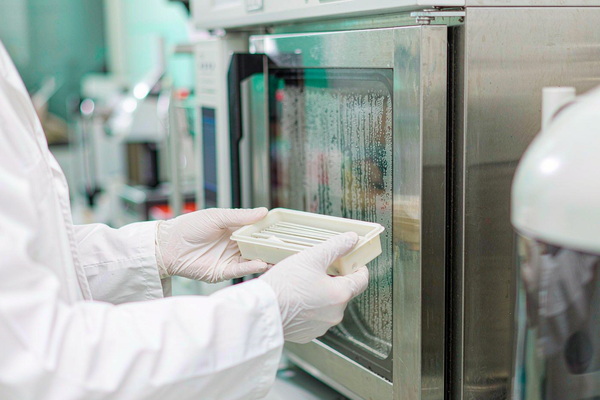
A systematic testing plan is the best way to prove an additive's value. This table shows which additive to prioritize and what to measure based on the problem you're seeing.
| Problem Encountered | Priority Additive to Evaluate | Key Metrics to Test |
|---|---|---|
| Insufficient melt strength | HyMax KL-180 | Rheology, MFR, film bubble stability |
| MFR too high / viscosity drop | HyMax KL-180 | MFR, molecular weight, extruder torque |
| Poor performance after recycling | HyMax KL-180 | MFR, mechanical properties, molecular weight |
| Strength loss after aging | HyMax 210 or HyMax 1010 | Hydrothermal aging, tensile strength retention |
| Need food-contact solution | HyMax 210 (with verification) | Compliance review, migration testing, dosage limits |
| Both processing & aging issues | Combination of KL-180 + 210/1010 | Compatibility, processing, and aging tests |
To get a full picture, your evaluation plan should include several key tests. Start by measuring the moisture content of your raw materials. During processing, monitor the Melt Flow Rate (MFR) and extruder torque. Use rheology tests to get a deeper understanding of melt viscosity and elasticity. After processing, test fundamental mechanical properties like tensile strength and elongation. For films, tear strength is important. For long-term performance, the most critical test is hydrothermal aging, where you measure the retention of mechanical properties after exposure to heat and humidity. These tests will give you clear, objective data to prove the additive is doing its job and delivering the performance you need.
Conclusion
In short, choose your PLA/PBAT additive based on your problem. Use a chain extender for processing issues and an anti-hydrolysis agent for long-term durability. Diagnosing correctly saves time and money.